Tuesday, 27 February 2018

Exam Question


How far is the way evidence is presented by the documentary filmmaker important in determining the spectators response? Refer in detail to the films you have studied for this topic.


Bowling For Columbine directed by Michael Moore, A Complete History Of My Sexual Failures directed by Chris Waitts and The Imposter directed by Bart Layton, all present evidence in different ways in order to gain an emotional response. Despite using different techniques such as reenactments or interviews, these techniques are important as they gain engagement from the audience whether that be relating to the the topic or empathising with those within the documentaries.


Moore uses many different techniques that effectively gain engagement from the audience. The topic of gun crime is more relatable to that of an American, so an international audience would be more likely to sympathise with the topic and the victims. One of the techniques that Moore uses to determine the spectator response is interviewing two victims of the Columbine shooting, Mark taylor and Richard Castaldo. Moore continues to use his hand held camera movement and informal interviewing method to talk to the two boys. We are given a personal view of the effect of gun violence, presenting specific evidence in this way is effective way because it allows the topic to be easier to sympathise with due to the informal tone. Moore uses interviews throughout the documentary with many of them being relatively informal. The interview he conducts with Charles Heston has a more serious tone than the rest. It is clear that Moore is presenting evidence against gun violence and the relaxed laws in America, so his interview with Heston, the head of the National Rifle Association, was presented a lot more seriously than others as Charles Heston is condoning the behaviour that has cost 11,127 incidents per year (during the time the documentary was shot). A Complete History Of My Sexual Failures does not carry a tone that is as serious as Bowling For Columbine, in fact it is a comedic mockumentary. The evidence that Waitts presents is creates a personal link for the audience to become involved with. He shows the audience, pictures, phone calls, videos and interviews with his mother to prove his sexual failures. Proving the point he is failing in his love life makes the audience shocked but also makes them laugh. Both Bowling For Columbine and A Complete History Of My Sexual Failures creates a personal link to the evidence to determine the spectators response.

Thursday, 18 January 2018

Fight Club 1999- David Fincher

What is Fight Club about? 

Image result for fight club

Fight Club is an extremely complicated film, with different theories about what it is about. The protagonist, a depressed office worker with insomnia, meets a "soap maker" called Tyler Durden on a business trip, after this the plot thickens. It is clear that Tyler Durden is an alter ego caused by hallucinations from having insomnia. This possibility is posed during the end of the film before Tyler blows up city buildings. The existence of Tyler is also questioned when Marla comes to see Edward Norton's character but shortly leaves in anger after Norton's character states that "Tyler isn't here" whilst holding a bottle of alcohol. 


Wednesday, 6 December 2017

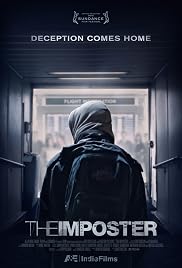
The Imposter 2012- Bart Layton

Image result for The Imposter


The Imposter stands out in style compared to other documentaries I have looked at. Using stylistic features to tell the story of the missing; Nicholas Barclay. Using sit down interviews and stylised reconstructions, we are shown all sides to the story.

Initially, Barton portrays the missing boys family as innocent by subtly revealing their side of the investigation. The audience feels sympathy due to the telling of how Nicholas went missing and how Frederic Bourdin began to spiral into taking the identity of the missing child. By Frederic explaining how he pretended to be child and eventually stealing the identity of a missing child, Barton shows us just one element of an extremely complicated plot. Barton lays the plot out in a specific way in order to add more questions for the audience. By the end of the documentary, we are left questioning the integrity of the family rather than the man that has been stealing the identity of children for years.

Similar to The Act Of Killing, The Imposter includes the main people in the events retelling the story. Despite this, the two documentaries differ. Oppenheimer's The Act Of Killing includes different ways in which the main people retell a story, for example: Anwar and his colleagues making a film to create a reenactment of the mass killings, visiting old sites to recount memories and sitting down to talk about the past. On the other hand, Barton uses the very personal method of a sit down interview to give the audience detail on what happened. With this method we can see their body language and facial expression which can be another way to gain perspective rather than just speaking.   


Friday, 1 December 2017

Comparing Production Context

Director, Budget and Box Office

La Haine directed by: Mathieu Kassovitz
City Of God directed by: Fernando Meirelles and Katia Lund
Rust and Bone directed by: Jacques Audiard

Rust and Bone has the highest budget of €15.4 Million out of the three films, City Of God is the second highest with a budget of €2.7 Million, La Haine had the lowest budget of €2.3 Million. It is not surprising that Rust and Bone has the highest budget out of the three films as the director needed to use CGI in order to give the impression that Stephanie has no legs. The use of the killer whales can also be another factor that would increase the budget. Despite having the highest budget, Rust and Bone did not make the highest in box office, it made 25.8 million dollar compared to City Of God that made the highest at box office, it made 30.6 million dollars. La Haine came in at 15.3 million dollars, which was way above the budget.

History and Information

Critical reception

Reviews and Awards

National and Global Production Information

Production Stage


Tuesday, 28 November 2017

A Complete History Of My Sexual Failures 2008- Chris Waitt

Image result for a complete history of my sexual failures


A Complete History Of My Sexual Failures takes a more personal approach to documentary. Chris Waitt documents his journey in finding out why he such a terrible boyfriend. He uses a gonzo style of documentary in order to effectively create an invasive feel into his life.

The personal element effectively ties together Chris' issues and the light humour of his misfortune. A majority of the film takes place in his flat. The mise en scene of his flat gives the audience an insight into his personality despite creating an extremely personal feel to the documentary. The messy interior of his flat connotes his is unorganised and furthermore doesn't have much about himself. His messy flat is an issue later addressed by his mother. 

The documentary creates a sense of catharsis for the audience. Leading to one issue to another, such as; mental health issues, erectile dysfunction, failing to successfully fix his erectile dysfunction and just the overall sense of loneliness he gives off, makes the audience sympathise for him rather than empathise as he appears pretty hopeless. 

The Act Of Killing 2012- Joshua Oppenheimer

Image result for the act of killing

The Act Of Killing uses the perspective of the killers in Indonesia to show the audience the extent of the mass killings. Despite merging talks about the events from the main figures such as; Anwar Congo, Herman Koto, Yapto Soerjosoemarno and others, Anwar and his past colleagues present the killings in Indonesia through the median of film.  

Film is one of the main themes in the documentary. There a multiple scenes of Anwar and Herman reminiscing about going to the movie theatre as they were "movie theatre gangsters". Depicting this theme within the documentary is effective in bringing a group of mass murderers down to a human level. The dream like opening scene and focusing documentary on celebrated killers in Indonesia presents a gap for within the characters that separates them away from humanity. Having the common interest of film grounds the characters as they have been set above those around them and brings a sense of normality into the documentary.

The crimes that Anwar has committed appears to be haunting him compared to fellow killers, how this is portrayed can make us question whether he actually is truly bearing the burden of murder. When Anwar is talking to Adi, he talks about how a specific method of killing haunts his dreams, Adi then mentions a neurologist for his troubles. In rejecting this we can question whether he really does care about how his past effects now. This can be compared to the scene in which he shows how he killed accused communists using a wire. He dances on the site in which he killed people, his performance during the documentary connotes different emotions towards his violent past.

The dream like scenes add a different tone to the documentary. Generally, The Act Of Killing has a dark tone due to the subject. During the dream scenes it comes across as the mass murders being celebrated. The girls dancing in bright coloured costumes throws off the topic. It could possibly connote the patriotism the main characters have as it appears to be traditional to Indonesia. 


Wednesday, 22 November 2017

Undefeated 2011- Daniel Lindsay and T.J. Martin Compared To Bowling For Columbine 2011- Michael Moore


Image result for bowling for columbine


Image result for undefeated documentary


Undefeated differs to the style of Bowling For Columbine. Lindsay and Moore document different topics in differing styles.

In Bowling For Columbine, Michael Moore uses a participatory style of documentary in order to show the audience the topic he is covering. Using the participatory style is effective for bowling for columbine because Michael Moore puts himself into the documentary and agitates the people he is interviewing. The topic is covers has had such a negative effect on society across America and people truly believe that having a gun is a safe thing. The way in which Moore agitates the interviewees effectively draws out answers to shock the audience and show them the effect a heavy gun society has on people that live within that society. During a lot of scenes within Bowling For Columbine, the camera is handheld and relatively shaky, this can show the audience that they are filming the majority of the time to give as much detail of the place surrounding them to show the impact of guns in America. A main focus of the documentary is the school shooting in Columbine High School, despite this, the topic of gun control leads onto many other events in America that was caused by loose gun laws.

Undefeated differs to this as the directors follows the journey of a football team in Manassas High School, rather the Moore's technique of the participatory style in Bowling For Columbine. In particular we follow the coach, Bill Courtney, and three students; O.C, Money and Chavis. This has a different effect than Bowling For Columbine. Even though we are following a journey of a football coach and three students, we are still shown by Daniel Lindsay and T.J. Martin what is like to be part of an elitist education system in a extremely area; inner city Memphis. In order to show the effect the school system that America has, the director's enable the audience to emotionally attach themselves to people that are struggling within that situation.  This is effective in ensuring the audience's emotional attachment and making the issues that are presented within Undefeated resonate within the viewer's mind.